I recently had the pleasure of attending a lecture at the Art Institute of Chicago called "Territorial Insecurity," given by Felicity Scott of Columbia University. A description of Scott's work and a precis of her lecture can be found at the AIC website.
Scott has two books coming out this year: one a compilation of past essays, and another called Outlaw Territories: Environments of Insecurity/Architecture of Counterinsurgency, the closing remarks of which was the starting point of her lecture at the AIC.
Outlaw Territories, available at MIT Press in 2016
So you've got your project notebooks and your pens and your sticky flags. You're ready to keep your own notes organized - first milestone on the Data Mountain path cleared. Now let's look at how to manage the project files.
I had the very good fortune to work under an extremely organized project architect when I started working full time after graduating architecture school. I still use his methodology (with some minor tweaks and customizing) to keep project files in order, but each office will be a little (or sometimes a lot) different. He was the senior associate, so he oversaw most of the projects in the office and was in a position to make sure his standards were enforced - not always the case!
Where do you start if you're the one setting the standards?
I started working in an architecture firm in 2003.
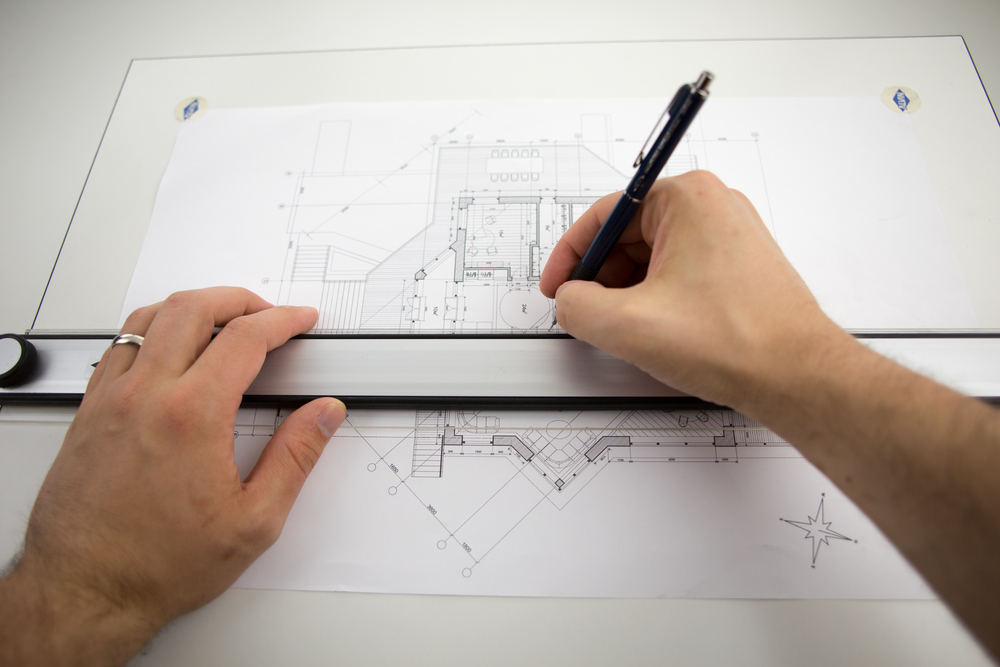
It was a tiny residential firm; just the principal, one employee, and one intern (me). Because it was so very small, this office was still using some fairly antiquated technology, including parallel rules, a typewriter, Letraset, and an ammonia printing machine with that UV-light-sensitive paper (!!).
Parallel Rule - check out those drafting dots!
Letraset - the coolest and most tedious lettering method imaginable.
The most up-to-date pieces of technology in the office were the fax machine, with the old-style roll of slippery thermal paper, and the printer/copier, which had no scan or fax function. It was only in 2005 that AutoCAD made it into the office, shortly followed by sending out files to a remote printing service and abandoning the poor stinky ammonia printing machine.
The reason I mention all this (other than #humblebrag) is that there wasn't an overwhelming amount of correspondence and documentation to track. Meeting notes, field notes, site photos (on film!), letters, transmittals, billing documents, the occasional fax; nothing like the landslide of pictures and renderings and submittals and RFIs and product brochures and emails (Lord, the emails!) today.
A loose collection of art that I believe is particularly architectural. Each piece invites the viewer to look at something in a new light (as great art does) but many of these subjects are architectural in nature - in this case the (usually ignored) backdrop of the every day. Artists are credited below each photograph.
What impact she had on the architectural world is immeasurable, though I'm certain in the days to come there will be many out in force attempting to do so. I confess, her architectural designs interest me less than her approach to life and practice. I admire her audacity, her unapologetic and uncensored personality - the Queen Bitch that some loudly deride but many secretly (or not-so-secretly) want to be. And to be a woman and an Arab woman at that in this profession - such incredible will.
An obituary (like the article linked above) is by its nature somewhat bland and matter-of-fact. I rather think this profile from a few years ago is more appropriate to someone so much larger-than-life as Hadid: