Vendor information in your materials library should not be old enough to vote, or worse, run for office.

Showing posts with label documentation. Show all posts
Showing posts with label documentation. Show all posts
Wednesday, December 7, 2016
Lessons from the Field
Over the years I have been astonished anew to discover some things I thought could go
unsaid need saying. Here are just a few of those nuggets of wisdom.

Thursday, August 18, 2016
Thursday, April 14, 2016
On Practice: Climbing the Data Mountain
This is the second in the "On Practice" series - see the first entry here: On Practice: A Fistful of Notebooks
So you've got your project notebooks and your pens and your sticky flags. You're ready to keep your own notes organized - first milestone on the Data Mountain path cleared. Now let's look at how to manage the project files.
I had the very good fortune to work under an extremely organized project architect when I started working full time after graduating architecture school. I still use his methodology (with some minor tweaks and customizing) to keep project files in order, but each office will be a little (or sometimes a lot) different. He was the senior associate, so he oversaw most of the projects in the office and was in a position to make sure his standards were enforced - not always the case!
So you've got your project notebooks and your pens and your sticky flags. You're ready to keep your own notes organized - first milestone on the Data Mountain path cleared. Now let's look at how to manage the project files.
I had the very good fortune to work under an extremely organized project architect when I started working full time after graduating architecture school. I still use his methodology (with some minor tweaks and customizing) to keep project files in order, but each office will be a little (or sometimes a lot) different. He was the senior associate, so he oversaw most of the projects in the office and was in a position to make sure his standards were enforced - not always the case!
Where do you start if you're the one setting the standards?
Tuesday, April 12, 2016
On Practice: A Fistful of Notebooks
I started working in an architecture firm in 2003.
It was a tiny residential firm; just the principal, one employee, and one intern (me). Because it was so very small, this office was still using some fairly antiquated technology, including parallel rules, a typewriter, Letraset, and an ammonia printing machine with that UV-light-sensitive paper (!!).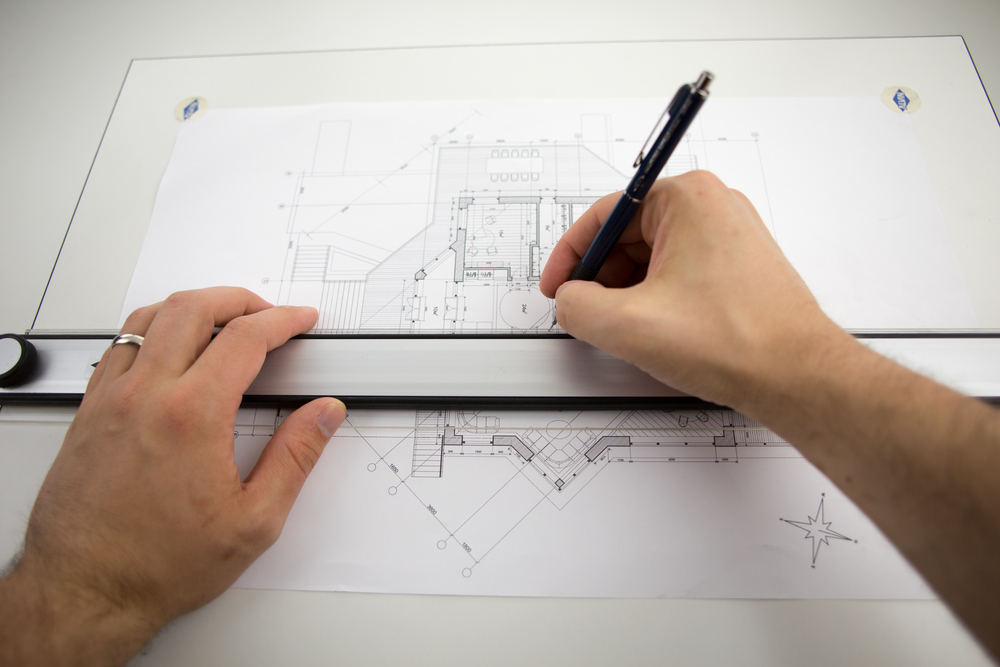 |
| Parallel Rule - check out those drafting dots! |
 |
| Letraset - the coolest and most tedious lettering method imaginable. |
Subscribe to:
Posts (Atom)